
It may be true to suggest that American democracy began when the United States Constitution was ratified and adopted in 1787. However, that would not be historically accurate.
The real truth is that American democracy did not fully come to pass until August 6, 1965, when President Lyndon Johnson signed into law the Voting Rights Act guaranteeing voting rights to millions of African Americans who had faced one obstacle after another in their attempt to exercise their voting rights.
The Voting Rights Act ended all the race-based obstructions that had previously prevented African Americans from exercising the right to vote guaranteed to all citizens regardless of "race, creed, or previous condition of servitude” by the adoption of the Fifteenth Amendment to the U. S. Constitution in 1870.
The immediate problem for those new citizens was that the states of the former Confederacy viewed the right to vote as a matter of states’ rights under the Tenth Amendment, thereby allowing them to place certain conditions on the rights that seemed to have been guaranteed by the federal government.
The first of those conditions was the Grandfather Clause that said a person was allowed to vote in a certain state or county if their grandfather had previously been a voter in that same state or county. By virtue of the timeline, there were no African Americans living in any of those areas whose grandfathers had been eligible to vote. State's rights overrode federal rights.
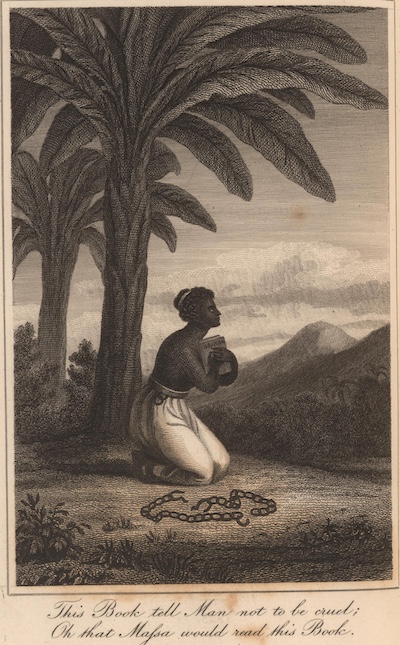
Courtesy of the John Carter Brown Library
The next obstacle was a literacy test that said to register to vote, a person not only had to be able to read, but to read and interpret a portion of a government document to the satisfaction of some court bureaucrats. Since learning how to read was a crime punishable by death for the reader and whipping for the teacher, most former slaves couldn’t pass that test.
The third and most ridiculous test assigned to those wanting to register was to tell a court worker precisely how many bubbles were in a bar of soap or how many jellybeans were in a jar. No matter the answer, it was always going to be wrong.
The final obstacle was economic: a poll tax that required each person seeking the right to vote to have deposited with the county a certain sum of money based upon their income. For people who had spent their entire lives working without wages, paying a poll tax was an economic impossibility.
So it was that from 1870-1965 the voting rights of African Americans were denied.
All that ended with the 1965 Voting Rights Act that declared that any state with a history of racial discrimination concerning voting rights can no longer change the state laws to block access to the voting booth by African Americans. Through a process called "preclearance", states would need to gain approval from the Department of Justice or from a Federal District Court judge before any changes could be made to exist voting policies.
The Voting Rights Act was so popular in most of the country that Congress voted to extend that act six times for five years with each extension. Every American president from Richard Nixon to Joe Biden signed the extension. It seemed that democracy had now been fully established. Surely, the battle was over!
Then came a challenge to Section Five and the preclearance principle. In Shelby County vs Holder [2013], the U.S. Supreme Court stripped away Section Five, saying it was no longer necessary. The court asserted that voting rights for all citizens was now settled law. Section Five was said to be unconstitutional. Almost at once, states began to redraw voting lines to reduce the number of Congressional districts where African Americans were likely to be successful in electing representatives sympathetic towards their interests.
The number of polling stations and drop boxes for ballots are still being reduced. Early voting locations are being set up in places more difficult for many people to access. Texas is currently trying to create five new seats likely to be held by Republicans by squeezing out as many Democrats districts as possible.
True democracy in the United States has lasted for only 48 years. In every way possible, state Republican parties, Project 2025 architects, and the MAGA movement are working to return the right to vote back to those who qualified before the 1870s. Granted, there has been no attempt to repeal voting rights for women which had been guaranteed in 1920 by the Nineteenth Amendment to the U.S. constitution. However, when it comes to African Americans, restricting voting rights and the opportunity to run for and hold elected office is currently under assault in this country. I guess that is what they mean by Make America Great AGAIN!
• • •• • •
RECENT:


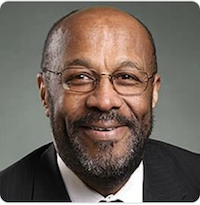 The Rev. Dr. Marvin A. McMickle is pastor emeritus of Antioch Baptist Church in Cleveland, Ohio. He also served as president of Colgate Rochester Crozer Divinity School, Rochester, New York, from 2011 to 2019.