

Op-ed by Paul Hill Jr.
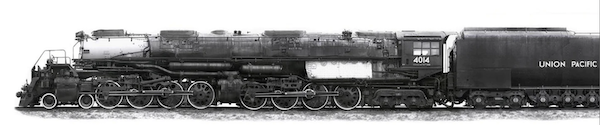
Today, my grandchildren, ages nine and twelve, rushed to tell me that Union Pacific's famous Big Boy locomotive was coming through Northeast Ohio. They had learned about it in their classes at Cleveland Montessori School and were excited by the possibility of seeing one of the most famous steam locomotives in American history. About fifteen minutes before the locomotive was scheduled to pass through East Cleveland, they made me aware of it. We hurried from the house and made our way to an overpass where the locomotive would pass beneath us.
Then it appeared.
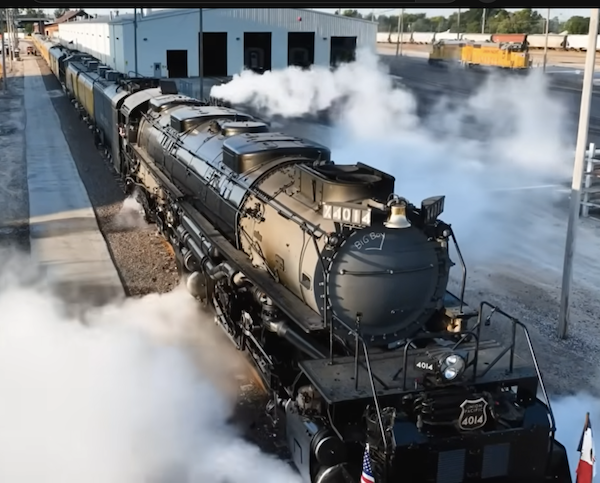
The whistle sounded before the locomotive came into view. Moments later, the massive steam engine emerged beneath us, rolling across steel rails with a force that seemed to belong to another era. Black smoke rose into the sky. The ground trembled. For a moment, it felt as though history itself was passing through our community.
But something else caught my attention. There was virtually no one else there.
After the train passed through East Cleveland, we followed it into neighboring Euclid. The contrast was remarkable. Thousands of people lined railroad crossings and streets waiting for a glimpse of the locomotive. Families gathered with children. Cameras pointed toward the tracks. Entire communities turned out to witness a piece of American history.
My grandchildren immediately noticed the difference. “Papi,” they asked, “why are all these people here in Euclid, but nobody was watching in East Cleveland?”
It was a good question because children often see what adults overlook.
Their question opened the door to a much larger conversation about history, memory, community, family, and the approaching 250th anniversary of the Republic.
The Union Pacific Big Boy is not simply a locomotive. Built between 1941 and 1944, the Big Boy locomotives were designed to move enormous freight loads across the mountains of the American West. Big Boy No. 4014 now serves as a traveling museum and ambassador of American history.
For many Americans, the locomotive represents innovation, engineering, industrial development, and national achievement. Those interpretations are not wrong. But history is rarely a single story.
The same railroad system that helped build America's economic power also tells a story of labor, sacrifice, migration, inequality, and struggle. Long before the Big Boy was ever built, enslaved Africans and African Americans helped construct railroad infrastructure throughout the South. Following emancipation, Black workers remained essential to railroad operations, often filling some of the most dangerous and least appreciated jobs in the industry.
As we stood watching the locomotive, I told my grandchildren about Elijah McCoy, Granville T. Woods, Andrew Jackson Beard, and the Pullman Porters. I wanted them to understand that African Americans were not spectators to railroad history. They were builders, inventors, workers, organizers, and leaders.
I also reminded them that history is not only found in books, museums, documentaries, and classrooms. History also lives within families.
I told them that on their maternal side, their great-great-grandfather was a railroad man and a union man. I encouraged them to ask their grandmother, Gigi, to share stories about him and his years on the railroad.
The experience reinforced the importance of Gigi's lifelong commitment to researching family history. Through years of genealogical research, she has preserved not only names and dates but also places, experiences, and relationships that help future generations understand where they come from.
The tracks we watched that day connected more than cities and states. They connected generations.
The experience also caused me to reflect on responsibilities that extend beyond families. Parents, grandparents, and elders should take advantage of every opportunity to teach history. Sometimes a passing train becomes a classroom. Sometimes a child's question becomes a lesson about a nation.
Public institutions, schools, libraries, cultural organizations, media outlets, and elected officials also have responsibilities. They should help make citizens aware of educational opportunities that present themselves and encourage community participation.
I could not help but wonder how many families in East Cleveland knew the Big Boy would be passing through the city. How many children would have wanted to see it? How many conversations about history might have taken place if more people had known?
This question is especially important in East Cleveland, a majority African American city whose residents have contributed significantly to the history of Greater Cleveland, Ohio, and the nation.
Black history is not one month.
Black history is twelve months.
Black history is American history.
The roads, railroads, farms, factories, ports, universities, churches, labor movements, military institutions, and democratic struggles that shaped this nation all bear the imprint of Black labor, Black intelligence, Black creativity, Black sacrifice, and Black resilience.
Our history did not occur on the margins of America. Our history helped make America.
As America approaches its 250th anniversary, the challenge is not simply deciding whether to celebrate the nation. The challenge is to understand it and tell the whole story.
History does not teach itself. Someone must teach it. Someone must preserve it. Someone must pass it forward.
My recommendations are simple. Families should intentionally create opportunities for intergenerational learning and storytelling. Schools should connect classroom lessons to local history and current events. Libraries and cultural institutions should actively promote educational opportunities. Public officials should view civic education as part of their responsibility to the people they serve. African American communities should continue documenting, preserving, and sharing their own histories.
The Big Boy carried more than freight in its lifetime. On this journey, it carried history. And for a brief moment in East Cleveland and Euclid, it carried a conversation between a grandfather and his grandchildren about family, community, memory, responsibility, and the many tracks that brought us to where we stand today.
My grandchildren thought they were going to see a train. Instead, they encountered history. So did I.
And if we are wise, we will make sure our children are standing close enough to hear history when it whistles.
• • •• • •
Paul Hill Jr. is executive director emeritus of East End Neighborhood House and founder of the National Rights of Passage Institute.