
Community activist was known nationally for his work
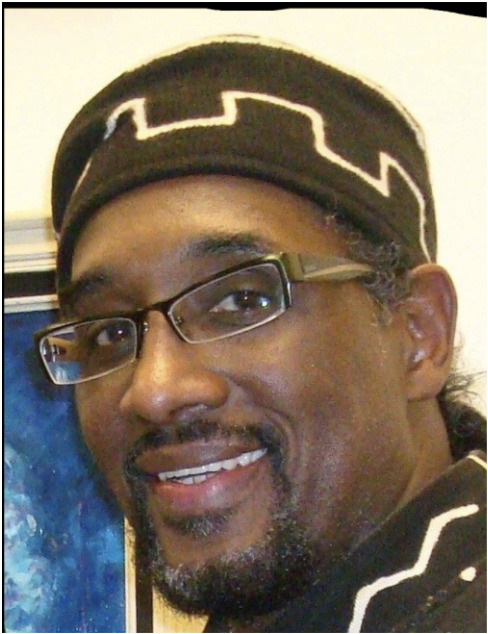
October 13, 1952 — March 19, 2026
Khalid A. Samad, a nationally recognized community activist, gang intervention specialist, and longtime advocate for peace and youth empowerment, has died, leaving behind a decades-long legacy of grassroots leadership and urban violence prevention in Cleveland and beyond.
Born Oct. 13, 1952, as John Farley, he changed his name to El Hajj Amir Khalid A. Samad after his conversion to Islam in the 1970s. He was a basketball phenom hailing from the Lee Harvard neighborhood of Cleveland, attended John F. Kennedy High School and was later inducted into the school’s hall of fame. His talent on the court earned him a ticket to Samford University in Birmingham, Ala. But it was his work off the court that would solidify him as a household name.
“Losing him feels like losing a piece of the city’s soul,” said Cleveland City Council President Blaine Griffin in a statement. He was the heartbeat of our neighborhoods and a man who spent every waking hour trying to save our kids from the streets... For decades, I watched him walk into the most difficult situations with nothing but a sense of peace and a deep love for Cleveland… We’ve lost a giant, but I know the work he started will continue through all of us who were lucky enough to call him a friend.”
Samad is widely respected for his work bridging communities and confronting some of the most pressing challenges facing urban America, including gang violence, drug activity, systemic inequality, youth disenfranchisement and even advising city leaders.
Samad served in public office as Assistant to the Public Safety Director for the City of Cleveland during former Mayor Jane Campbell’s administration. Prior to this, he worked as a Gang Prevention and Investigative Specialist with the Cleveland Board of Education’s Gang Task Force throughout the 1990s and into 2000.
Cleveland’s longest serving mayor, Frank G. Jackson, remembers Samad this way: “Khalid Samad has been in the struggle for decades – from the crack cocaine epidemic of the 1980s to the gang and street violence of today. He paid his dues many times over. May he rest in peace. Job well done.” Valerie McCall, a member of the Jackson administration, says, “Khalid Samad was a fierce advocate for the people, this city and his community. He never forgot where he came from and remained unwavering in his commitment to fairness and equity. His style of leadership will be deeply missed – as will he.”
That commitment was exemplified when Samad co-founded the Coalition for A Better Life with fellow community leaders, including the late Omar Ali-Bey. The organization brought together a broad and diverse alliance of Muslims, Christians, Jews, Hebrew Israelites, civil rights advocates and community activists from various political and cultural backgrounds. The coalition was notable for its interfaith and cross-cultural unity, an approach considered groundbreaking at the time.
In 1989 Samad began doing business as Peace in the Hood, Inc., a subsidiary of the Coalition For A Better Life. For close to 40 years the organization has addressed a myriad of community problems facing at-risk/high-risk youth and young adults from a holistic perspective. Through that work, Samad became a leading voice on urban violence prevention and youth development.
“We always enjoyed working with Bro. Khalid [for the] insight he brought to the work; saving the lives of young people, was always first and foremost on his mind and in his heart,” said Pastor Grady L. Stevenson of Damascus Road Ministries C.O.G.I.C.
One of the coalition’s most significant impacts was felt in the King Kennedy Housing Estates, where violence had once reached crisis levels. Community-driven interventions helped reduce crime and led to millions of dollars in new investment and services for residents. Samad also played a role in fostering cross-cultural dialogue, serving on the City of Cleveland’s Arab American Concerns Committee in response to violence targeting local business owners.
His influence extended to national policy discussions as well. In 2008, he participated in a youth violence summit in Washington, D.C., hosted by U.S. Rep. Bobby Scott, and in 2009 he spoke on Capitol Hill in support of the Youth PROMISE Act. Samad gained national and international recognition for his expertise, appearing on major broadcast platforms including “Nightline,” and programs hosted by Tavis Smiley, The Rev. Al Sharpton and Warren Ballentine, as well as international outlets such as BBC, France TV and Tokyo TV.
Samad passes just shy of 10 years after being inducted into the 2016 Class of the Cleveland International Hall of Fame in April of that year. More than 500 people attended the induction ceremony at the Marriott at Key Center. He was inducted by then-City of Cleveland Community Relations Board Director Blaine Griffin. He was inducted in recognition of his contributions, underscoring the lasting mark he made on Cleveland’s civic and social landscape. He was honored by the Council on American Islamic Relations (CAIR) in 2025 with a Lifetime Achievement Award noting that “his impact on the community in Cleveland is immeasurable.” Both Samad and his wife were honored at last year’s inaugural Iftar in the City Ramadan event acknowledging area Muslims who are advancing the Islamic community.
A 1996 profile of Samad's work appeared in the The Plain Dealer.
Khalid Samad is remembered as a tireless advocate, a unifying force across cultural and religious lines, and a pioneering leader who fought the good fight for safer, stronger communities and racial and religious equality. He leaves behind four daughters, Najah, Aisha, Imani and Makeda Farley; his wife, Raj Roberson Samad; two brothers, Michael Farley Sr. and Stephen Farley as well as a host of grandchildren, nieces, nephews, cousins and extended family and friends.
Funeral services were held at 12:30p, Saturday, March 21 at the Islamic Center of Cleveland, 6055 West 130 Street [44130], followed by interment at Evergreen Memorial Park Cemetery. Arrangements were entrusted to Gaines Funeral Home. A community memorial service is planned for a later date.
• • •• • •
This article was updated March 28, 2026 to include mention of a 1996 profile of Samad's life and work.