
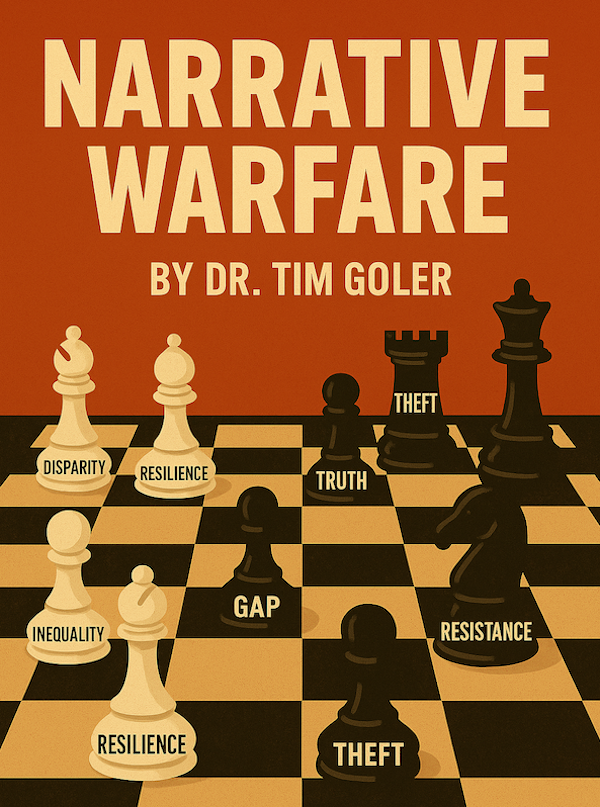
We are in a war of words. Not just bad policies or broken systems, but a war over how those systems are described, defended, and disguised. The truth hasn’t changed. What’s changed is how we’re allowed to talk about it.
Let’s start with three undeniable facts:
- For every $1 a white family has, the average black family has about 12 cents. That’s not a typo. That’s the racial wealth gap, and it’s been that way for a long time.
- Black women are nearly three times more likely to die during childbirth than white women. And it doesn’t matter if they are rich, educated, or live in a “good” zip code.
- Black neighborhoods have lost billions over the years to shady loans, banks pulling out, and money being kept out on purpose. And it’s still happening.
This is the kind of truth we rarely hear clearly. We’ve been trained to speak softly about our suffering. Somewhere along the way, the word inequality replaced theft. Disparity replaced violence. And trauma-informed replaced truth-telling.
Every few years, a new set of buzzwords gets handed down. Words that sound nice. Words that fit into grant proposals or slide decks. And every time we accept them without questioning what they do, we lose something. We lose clarity. We lose power. And we lose the right to call a thing what it is.
Polite language is deliberate dilution:
- For every 10 white families that own their homes, only about 4 black families do. That gap hasn’t moved in 50 years, and it’s not by mistake.
- Black people are locked up about 5 times more than white people. That’s not about crime. It’s about a system built to target us.
- Black students are nearly four times more likely to be suspended or expelled than white students, even in preschool. That’s not discipline. That’s conditioning.
If we can’t name it clearly, we can’t organize around it. We can’t resist it. And we certainly can’t dismantle it.
When we speak with force, they police our voice. Call it angry. Call it unprofessional. Call it “inflammatory.” That’s the second part of the trap. Not only changing the language, but policing who gets to speak it.
This isn’t just semantics. It’s strategy. The same way Jim Crow used literacy tests and redlining to control us, the current order uses buzzwords and policy briefs to smooth over the fire. They take the sharp edges off our experience and treat the truth like it’s too loud to endure.
Silence hasn’t saved us:
- Black families have lost over $300 billion in stolen home value and blocked ownership. That’s money that should’ve been passed down, and it was taken from us.
- Black people get treated worse in hospitals and doctors’ offices, and we die younger because of it. That’s not genetics. That’s the system.
- They break us, then tell us to be strong. So, we end up blaming ourselves instead of the system, and that confusion is part of the plan.
Resilience is not the goal. Clarity is.
Clarity means naming what’s happening. Black people are not just facing “gaps.” We live under containment through underfunded schools, overpoliced streets, criminalizing media narratives, and policy frames that treat our pain as a statistic.
The language of the state has evolved, but its function hasn’t. It still protects power. It still evades accountability. And it still insists we play along.
We don’t have to.
We can:
- Reclaim our words.
- Reclaim the right to say exactly what’s happening in our communities without translation.
- Reclaim our institutions, our tongues, our tools, and our timelines.
Reject the soft script. Write something sharper. Something rooted in clarity and built for change. Because until the truth is told clearly, freedom remains a whisper. And we were never meant to whisper through injustice.
• • •• • •
M o r e:
The Big Beautiful Lie
The War for Your Mind is Being Televised
AI and Black Influence
The Quiet Dismantling
Inner Leadership: Becoming the Black Men We Need Now
To Unmake a People
Cloaked in Our Right Minds
The Real Fight Is Inside
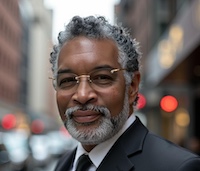 Dr. Tim Goler is Associate Professor of Sociology and Urban Affairs at Norfolk State University. He also serves as the Director of Research at NSU’s Center for African American Public Policy. A native Clevelander, he hails from the city’s Glenville neighborhood and is co-founder of PolicyBridge.