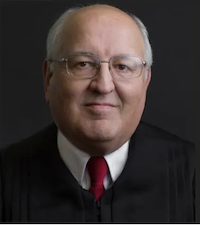

Op-ed by Paul Hill Jr.

Forest Hill Park in East Cleveland [City website]
“Each generation must, out of relative obscurity, discover its mission, fulfill it, or betray it.” — Frantz Fanon
“The world is before you and you need not take it or leave it as it was when you came in.” — James Baldwin
When the State of Ohio filed its petition on November 5, 2025, seeking to place East Cleveland under a state-appointed receiver, it did more than open a new chapter in fiscal law—it reopened an enduring question of democracy: Who governs the governed?
For over a century, East Cleveland has symbolized community endurance and the struggle for black self-determination. From its early days as a proud industrial suburb to its transformation into a majority African American city, East Cleveland’s residents have built churches, block clubs, neighborhood associations, and cultural institutions that continue to anchor civic life. Through hardship and neglect, its people have persevered, guided by faith, family, and the principle that those who live here must lead here.
Now, that principle stands in jeopardy.
Understanding the State’s petition
The Attorney General’s petition invokes a newly enacted law, R.C. § 118.29, allowing the creation of a state receivership over municipalities in long-term fiscal emergency. If applied, East Cleveland would become the first city in Ohio to lose its fiscal autonomy under this statute.
The filing cites chronic financial mismanagement and a lack of structural reform. These concerns are real, and the need for fiscal correction is undeniable. Yet the proposed remedy — a full receivership in which local elected officials are effectively displaced — raises constitutional and ethical questions about the erosion of home rule, the loss of local voice, and the precedent such an intervention would set for struggling communities across Ohio.
Why Home Rule still matters
Home rule is not an abstract legal concept. It is a living covenant between people and place, enshrined in Article XVIII of the Ohio Constitution. It ensures that local governments can shape policies reflecting the realities and aspirations of their residents.
In East Cleveland’s case, home rule is a vital instrument of empowerment — one that connects fiscal accountability to civic responsibility. A state takeover may restore the books, but it risks bankrupting the trust between citizens and their government.
A partnership model for fiscal recovery
The choice before state officials and the Court is not between control and collapse. There exists a middle path — a conditional, partnership-based receivership that protects the city’s autonomy while ensuring fiscal discipline.
Under this model, the receiver would collaborate with local leadership, serving as a technical partner rather than a replacement authority. The approach would emphasize shared responsibility and transparent benchmarks for recovery.
A partnership model would include:
• Collaborative governance: Require the receiver to consult regularly with the mayor, council, and financial commission before implementing major actions.
• Transparency and communication: Mandate quarterly public reports and town-hall meetings to ensure residents are informed and involved.
• Defined timeline: Set measurable goals and a clear exit strategy that restores full authority once fiscal targets are met.
• Community protection: Safeguard vital programs — public safety, youth development, senior services, and neighborhood renewal — during the recovery process.
• Capacity-building: Use state oversight as an opportunity to strengthen, not supplant, local administrative systems.
A call for consideration
East Cleveland’s story is not one of failure; it is one of unfinished potential. The residents of this city have demonstrated extraordinary resilience and civic pride despite decades of economic decline. The question before state and judicial leaders is whether that resilience will be rewarded with partnership — or replaced by paternalism.
To impose a receiver without local participation would be to mistake management for leadership. True recovery demands both.
As the Court of Claims and the Attorney General deliberate the future of East Cleveland, let this recommendation be clear:
- Support fiscal discipline, but not disenfranchisement.
- Enforce accountability, but not exclusion.
- Pursue reform that restores — not removes — the people’s right to self-government.
Fanon urged each generation to discover its mission. Baldwin reminded us that the world can be remade. The mission before Ohio now is to demonstrate that fiscal recovery and democratic integrity can coexist.
East Cleveland is ready to do its part. The State must meet its people halfway.
• • •• • •
Paul Hill Jr. is executive director emeritus of East End Neighborhood House, founder of the National Rights of Passage Institute, and a long-time resident of East Cleveland.